
Life insurers, on the prodding of global reinsurers, are set to hike premiums on term plans because rising mortality after the second wave of the pandemic has led to an increase in the number of settlements. Some will do so next month while others may wait till January. Global reinsurer Munich Re had nudged its insurance partners on the hike in September and insurers have been engaged in negotiations with the reinsurer on the amount of the increase. Term plan prices in India were among the lowest in the world for a long period but in the past couple of years, they have been increased a few times.

You are charged the same premium and also enjoy continuity benefits

Self-employed individuals often face hurdles in buying term insurance due to financial documentation that doesn't fully reflect their earnings. This complicates underwriting.

High-value insurance policies experienced muted growth in the first six months of the current financial year after the Centre decided to tax such products in this year's Budget. Simultaneously, there has been a marked improvement in the growth of policies with premiums of 'less than Rs 5 lakh', mainly originating from smaller cities. During this year's Budget, Finance Minister Nirmala Sitharaman proposed that insurance policies (excluding unit linked insurance plans or ULIPs) with an aggregate premium exceeding Rs 5 lakh, and the maturity amount, would not be exempt from tax.

The mutual fund (MF) industry has seen a fair number of new entrants in the last 10 years but none of them have proved to be much of a challenge for the larger players. The list of top 20 fund houses, which manage over 90 per cent of the industry's total assets, continues to be dominated by players who have been in the business for more than a decade. Bajaj Finserv MF may change that, say experts.

Critical illness policies by life insurance companies provide a variety of combinations but have a complex fine print.

Group term insurance is far more cost-effective than an individual cover.

General insurance companies are likely to see a surge in demand for health insurance in the coming months due to falling air quality in the country. The health insurance segment has registered a strong growth after the pandemic due to higher awareness. In the first half of financial year 2023-24, the segment grew by 24.4 per cent to Rs 54,713.52 crore from Rs 43,981.54 crore in H1FY23, driving growth of the non-life insurance industry.

Twenty years after India's insurance sector was opened up, unshackling the control of state-owned companies, as many as 50 private players have set up shop. Along with their foreign partners, private players have brought about a sea change in the product offering, distribution and underwriting processes, and services levels. Yet, India's insurance penetration needle has not moved much.

Core retail segments like motor and health continue to report strong growth of 19-20 per cent with competitive intensity still visible in the motor OD (owner driven) segment. Commercial lines reported muted growth. Group health remains a key driver. Among the listed companies, ICICI Lombard continues to trail in the motor section while Star Health has lost its Y-o-Y retail market share although its better on a sequential basis.

'As on August 25, 94,753 Govindas have been insured.' 'This number is expected to rise further, as proposals for 5,000 to 8,000 Govindas are received daily.'
Leading private life insurers HDFC Standard Life, Bajaj Allianz and Birla Sun Life top the list of firms against whom consumers have filed complaints with sectoral regulator Irda for indulging in unfair business practices.

This recognition is a testimony of India's strong belief in promoting entrepreneurship

Motor insurance claims will also come in, due to the extensive damage to vehicles.

Insurance companies are seeking a separate deduction limit of Rs 1 lakh for insurance premium payment under Section 80C of the Income Tax Act in the upcoming Union Budget to bring in more people under the ambit of insurance. The insurers also want reduction in the goods and services tax (GST) rate of 18 per cent currently applied on health insurance products to 5 per cent to make such products more affordable to common people. Finance Minister Nirmala Sitharaman will present the Union Budget for 2022-23 on February 1.

Apart from special services from banks for their wealth management needs, HNIs are now getting offers from insurance companies, too.

It might be a cheaper option, but lack of clarity is choking its growth

The rise in premiums could be in the range of 5-25 per cent, depending on the features that each insurance company adds on its products. Insurance firms have been given time till September 30 to include modifications mandated by the regulator.

We are, therefore, setting up more branches in more tertiary terms, like tier 2 and tier 3 terms. Going forward, that is where the growth will come.

Penalty for unapproved policy changes allegedly reduced from Rs 17,500 crore to Rs 20 lakh
Penalty for unapproved policy changes allegedly reduced from Rs 17,500 crore to Rs 20 lakh

If the sum assured is less than 10 times premium, the proceeds will be taxed.

Inflow of more funds is likely to widen the reach of insurance and drive M&A activities in the sector where growth has stalled.

Maternity coverage is a specific feature in health insurance policies that covers the medical expenses associated with childbirth and complications associated, if any.
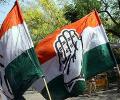
The Left parties, Janata Dal (United), and two other Opposition members on the committee opposed raising the foreign direct investment limit in the insurance sector from 26 per cent to 49 per cent.

If you are a frequent traveller, then you should opt for a multi-trip travel plan because it works out to be cheaper.

Although insurers feel loss ratios in the health segment may get impacted, and profitability will take a hit, capital erosion will not take place, at least for the large entities.

Its not so tough to improve insurance coverage at nominal cost.
Irdai had introduced two Covid specific products in the market - Corona Kavach and Corona Rakshak - that saw huge acceptance among the consumers as these products had lower premiums.
German insurance giant Allianz is planning to widen base in India with foray in banking business through its unit Dresdner Bank, besides expanding its existing non-banking financial services.

Staying healthy can reduce your next premium. Through wellness programmes, policyholders can get discounts ranging from 8 per cent to 30 per cent.

These schemes came into force from June 1.

Anik Jain, founder and CEO at Symbo, will answer your questions on insurance -- life, health, motor, travel, etc -- on a weekly basis.

FII stance, progress of monsoon, crude oil and rupee movement are likely to dictate the trend.
After the second wave of the pandemic, general and health insurers have seen a fall in their outgo of Covid-related health claims. In the July-September quarter (Q2 of FY22), insurers settled a little over Rs 5,000 crore worth of Covid health claims. This is 35 per cent lower than the Rs 7,700 crore worth of claims they settled in Q1, sources said.

LIC identifies the problems well, but what the markets will watch is how nimble it is with the solutions.
 © 2026 Rediff.com - Advertise with us - Disclaimer - Privacy Policy - Sitemap - Feedback - About us - Terms of use - Grievances